MMA Legislative Panel Discusses Homelessness, Street Medicine
February 1, 2024
The MMA hosted a panel in Duluth on January 25 to discuss legislative initiatives including homelessness, street medicine, and harm reduction, ahead of the legislative session kicking off on February 12.
The event welcomed local physicians, University of Minnesota Medical School faculty and students, and included Duluth lawmakers Sen. Jen McEwen and Rep. Alicia Kozlowski, who took questions from attendees and moderator Raymond Christensen, MD (associate dean for rural health at the University of Minnesota Medical School - Duluth).
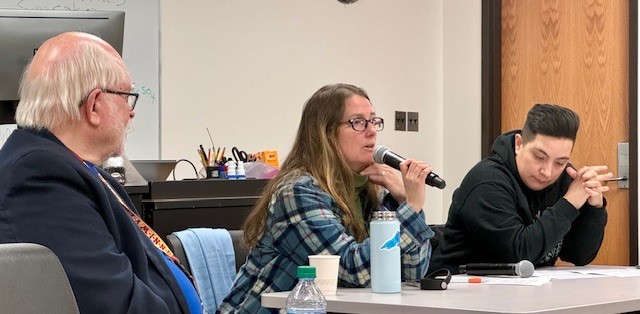 |
| Ray Christenson, MD (left), Sen. Jen McEwen, and Rep. Alicia Kozlowski served as panelists at the Duluth event. |
| |
“We’d like to know from our representatives what's being done in the Legislature, what they think might be able to be done, how they might be able to work with us, and is there a way we can work together collaboratively on these issues,” Christensen said.
Reducing substance use disorder morbidity and mortality through harm reduction strategies is one of five 2024 MMA legislative priorities. Harm reduction legislative initiatives include the expansion of medicated assisted treatment (MAT) in jails, prisons, and sober homes, efforts to strengthen Minnesota’s Good Samaritan law, and developing and implementing overdose prevention centers in Minnesota, among others.