Physician Wellness Legislation Passes Through Senate Committee
March 7, 2024
An MMA priority bill to improve physician wellness received its first committee hearing on March 7. SF3531 (Morrison, DFL – Deephaven) was heard in the Senate Health and Human Services Committee where it received overwhelming support and passed with a unanimous vote.
The legislation prohibits health system credentialing applications from inquiring about an applicant’s past health conditions. These questions have no impact on a person’s ability to practice and could discourage physicians from seeking treatment.
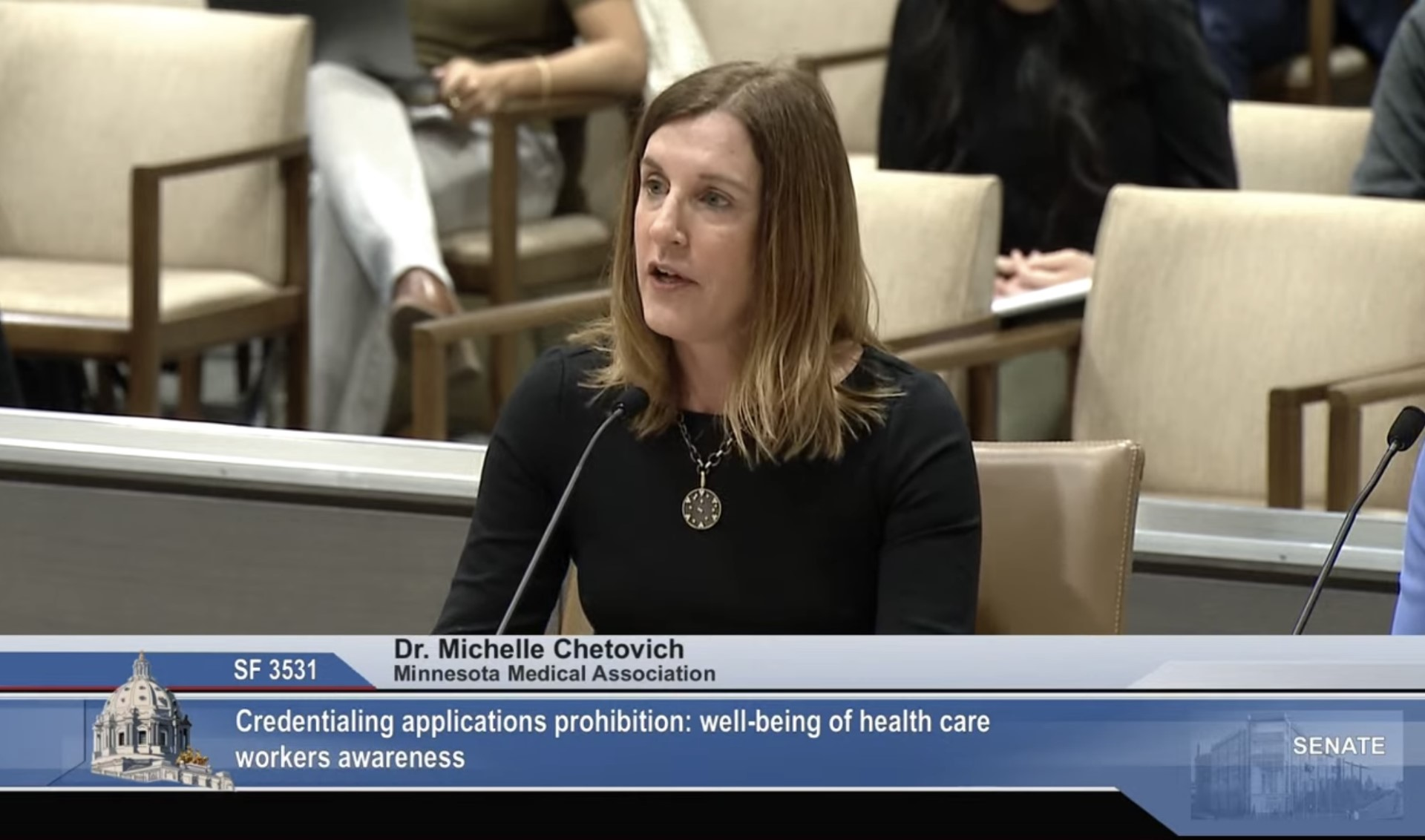 |
| Michelle Chestovich, MD, testifies in favor of physician wellness legislation in the Senate Health and Human Services Committee on March 7. |
| |
Additionally, the bill would create a program through which physicians can seek and obtain confidential care for career fatigue and wellness in a way that will not impact their careers. The SafeHaven program, which the MMA endorses, provides care for career fatigue and work/life balance. This section of the bill offers confidentiality protections for physicians participating in such programs. (For more information on MMA’s SafeHaven program, click here.)
The legislation also creates a statewide wellness recognition program to publicly recognize Minnesota healthcare institutions that have committed to creating and sustaining positive work environments that prevent burnout, foster professional well-being, and support quality care. This program will help other institutions learn and implement best practices.
Lastly, the legislation includes a one-time investment in a statewide campaign to educate the healthcare workforce about the importance of clinician well-being, encourage physicians to get care when needed, and reduce the stigma of mental health treatment.
“Our physicians are in trouble,” said Sen. Kelly Morrison, MD. “Burnout for healthcare professionals is a real problem that is getting worse.”
Morrison went on to cite that six in 10 physicians have felt inappropriate levels of anger, tearfulness, or anxiety – symptoms of burnout. She said one in three have felt hopelessness or that they have no purpose, and more than half know a physician who has considered, attempted, or died by suicide.
“Burnout has many causes such as lack of staffing, interferences from insurers and pharmacy benefit managers on practice decisions, the growing lack of trust in science – there is no one solution to the problem, but we must start to address it,” said Michelle Chestovich, MD, who testified on behalf of the MMA.
“My younger sister died by suicide,” Chestovich said. “Dr. Grethen Butler was an amazing and incredible woman. She was a beloved radiologist at Hennepin County Medical Center. She was a mother of three young children. She had a loving and supportive family. Burnout and sleep deprivation contributed to her death.”
“Will these steps eliminate burnout among physicians? No,” Morrison said. “But they will go a long way to remove barriers to care, remove stigma, and promote clinician wellbeing throughout our healthcare systems. This will help our physicians stay in the workforce and continue to provide excellent care to patients.”
The bill passed and was referred to the Senate Judiciary Committee. It has yet to receive a hearing in the House.