HealthPartners and Essentia Health Agree to Merge
October 1, 2026
On September 29, HealthPartners and Essentia Health announced that their boards of directors have approved an affiliation agreement to combine their organizations.

February 20, 2025
An MMA-supported bill that would give healthcare providers immunity from criminal liability when providing health treatment and services passed the Senate Health and Human Services Committee on February 20 after first failing to advance on February 18.
The bill makes it clear that a physician or other provider cannot be charged with a crime for a medical decision unless there was “willful, malicious, or intentional misconduct” by the practitioner. Nothing in the bill protects a practitioner for civil or administrative actions.
“Being a physician, I know the pressure I and my colleagues live under every day, to never make a mistake because when we make mistakes, the outcomes can be detrimental,” Sen. Alice Mann, MD, MPH (DFL-Edina), told the Senate Health and Human Services Committee regarding her bill (SF 971).
 |
|
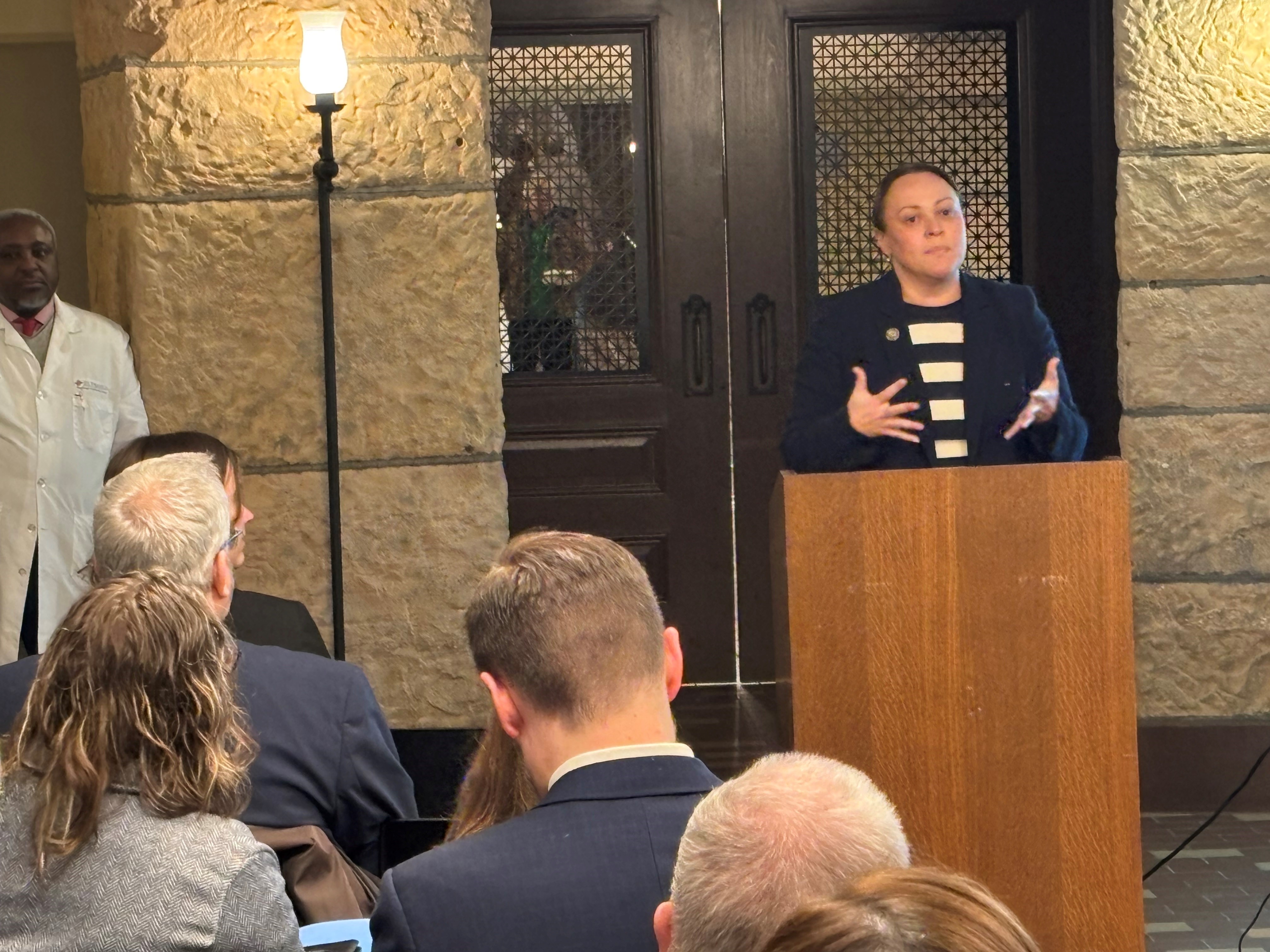
SF 971 is authored by Sen. Alice Mann, MD, MPH (seen here speaking to physicians at Physicians' Day at the Capitol). |
“However, healthcare providers are not robots, and by nature of being human beings, we simply cannot go through life without ever making a mistake,” she said. “If there is concern that if I were to make a mistake, I could go to jail 1) people will start hiding mistakes; and 2) people will not want to be caretakers.”
The bill stems from a recent case in Tennessee in which a nurse was charged with a crime for a patient error.
In its letter supporting the bill, the MMA stated that “medical decisions that are made based on trying to do what is best for the patient, and within the standard of care, should not be subject to criminal action. This legislation is essential to ensure that our healthcare providers can focus on delivering care to those in need, without the overhanging concern of potential criminal liability.”
Opponents raised concerns that the legislation gives too much immunity to providers. Mann clarified that the bill does not provide immunity for civil action. Physicians and others will continue to be accountable for malpractice charges. Physicians will remain accountable to the Board of Medical Practice to uphold the standard of care.
In the first hearing, an amendment was offered by Sen. Bill Lieske (R-Lonsdale) to limit the protections for actions related to “aiding suicide.” There was confusion about what impact the amendment would have caused, so the bill was laid over.
The bill was brought up again on February 20, and a new amendment was added to clarify that no protections are provided for the “intentional violation of law.” With this amendment, the bill passed and was sent to the Senate Judiciary Committee.
October 1, 2026
On September 29, HealthPartners and Essentia Health announced that their boards of directors have approved an affiliation agreement to combine their organizations.
October 1, 2026
On October 1, two significant provisions of the “One Big Beautiful Bill Act” (OBBBA, 2025) affecting non-citizen adults on Medical Assistance (MA; Minnesota Medicaid) take effect.
October 1, 2026
Five physicians, two physicians-in-training, a state senator, and two firearm safety advocacy organizations were all honored with MMA awards, as part of the association’s Empowering Physicians Event on September 25.